Posts | Why Concrete Settlement Happens After Commercial Landscape Construction — and How Property Managers Can Prevent It
Why Concrete Settlement Happens After Commercial Landscape Construction — and How Property Managers Can Prevent It
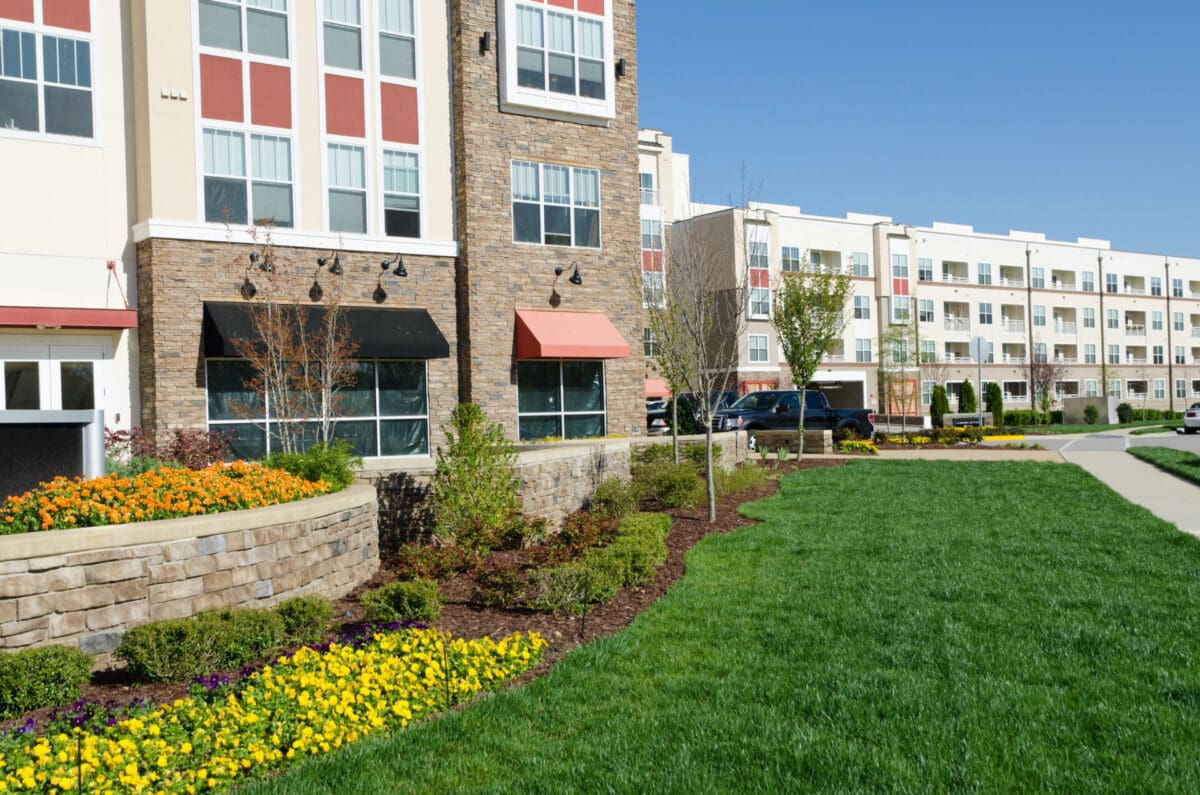
Commercial landscape construction plays a critical role in the success of any new development or property renovation. Thoughtful grading, drainage, and surface finishes don’t just improve appearance—they influence how the entire site performs over time.
Yet one issue continues to surface across apartment complexes, retail centers, office parks, and mixed-use developments: concrete settlement after landscaping is complete.
From uneven sidewalks to sunken driveways and pooling water near buildings, concrete movement can create safety risks, maintenance headaches, and costly callbacks. For property managers, these problems often show up months—or even years—after a project is considered “finished.”
Understanding why this happens is the first step toward preventing it. Understanding how to fix concrete settlement and returning commercial properties’ concrete to level is an important asthetic and safety issue.
Concrete Settlement Isn’t a Construction Mistake — It’s a Site Condition Issue
When concrete settles, the immediate assumption is often that something was done incorrectly during installation. In reality, concrete settlement is almost always caused by changes in the soil beneath the slab, not the concrete itself.
Landscape construction frequently alters site conditions in ways that unintentionally contribute to these changes, especially in large commercial properties where multiple trades overlap.
This doesn’t mean landscaping causes concrete problems—but it does mean landscaping decisions play a role in whether concrete stays stable over time.
The Most Common Causes of Post-Landscaping Concrete Settlement
1. Soil Disturbance During Grading and Excavation
Commercial landscape projects often require:
-
Regrading large areas
-
Excavation near sidewalks and curbs
-
Trenching for irrigation, lighting, or utilities
Even when backfilled properly, disturbed soil takes time to recompact naturally. If concrete is poured or left in place above soil that hasn’t fully stabilized, settlement can occur later—sometimes long after occupancy.
2. Drainage Changes That Redirect Water Beneath Concrete
Drainage is one of the most overlooked contributors to concrete movement.
Common issues include:
-
Downspouts draining near walkways or drive lanes
-
Slopes directing water toward hardscapes
-
Irrigation overspray saturating soil near slabs
-
Poorly defined swales that allow water to linger
Over time, water washes fine particles out of the soil beneath concrete, creating voids. The slab above eventually settles into that empty space.
For property managers, this often shows up as:
-
Sidewalk panels sinking
-
Driveway sections dipping
-
Concrete pulling away from curbs or buildings
3. Freeze-Thaw Cycles Compounding Soil Weakness
In climates with freeze-thaw cycles, moisture beneath concrete becomes even more problematic. Water expands when it freezes, loosening soil structure. When it thaws, the soil contracts—often without regaining its original strength.
This cycle repeats year after year, slowly weakening the support beneath concrete slabs until settlement becomes visible.
4. Landscaping Installed Before Soil Has Fully Stabilized
On new commercial builds, timelines are often tight. Landscaping is installed quickly to meet occupancy or inspection requirements, sometimes before soil has had sufficient time to settle.
The result?
-
Beautiful finished landscaping
-
Concrete that looks fine initially
-
Settlement that appears months later, once the soil finishes shifting
For property managers, this delayed timeline can be frustrating—especially when warranties are unclear or multiple contractors are involved.
Why Concrete Settlement Is a Bigger Problem for Property Managers
Concrete settlement isn’t just a visual issue. For commercial properties, it creates real operational concerns.
Safety and Liability Risks
Uneven sidewalks, walkways, and entry points increase the risk of trips and falls. Even small height differences can create liability exposure—especially in high-traffic areas.
Drainage and Water Intrusion
Sunken concrete changes how water flows across the site. Low spots collect water, which can:
-
Damage nearby landscaping
-
Increase ice formation in winter
-
Allow water to migrate toward foundations or structures
Escalating Maintenance Costs
What starts as a minor dip often grows into:
-
Worsening cracks
-
Joint separation
-
Repeated patching or temporary fixes
Left unaddressed, these issues typically become more expensive to correct.
Why Replacing Settled Concrete Isn’t Always the Best Answer
When concrete settles, replacement is often assumed to be the default solution. For commercial properties, however, replacement comes with drawbacks:
-
Demolition and debris removal
-
Extended downtime
-
Disruption to tenants or customers
-
Higher costs
-
Damage to surrounding landscaping
In many cases, the concrete itself is still structurally sound—it simply lacks proper support beneath it.
How Concrete Leveling Addresses Settlement Without Replacement
Concrete leveling focuses on restoring the support beneath a slab rather than removing the slab itself.
By stabilizing weak soil and filling voids beneath concrete, leveling can:
-
Lift sunken slabs back to proper grade
-
Restore drainage patterns
-
Eliminate trip hazards
-
Extend the life of existing concrete
For property managers, this approach offers a faster, less disruptive solution—often completed in hours instead of days or weeks.
When Property Managers Should Consider Concrete Leveling
Concrete leveling is especially effective when:
-
Sidewalks or walkways have settled unevenly
-
Drive lanes or parking areas show low spots
-
Water pools near concrete surfaces
-
Slabs have separated from curbs or buildings
-
Trip hazards are beginning to appear
Early intervention typically results in better outcomes and lower costs.
How Landscape and Concrete Professionals Can Work Together
The most successful commercial properties treat landscaping and hardscape maintenance as connected systems—not isolated scopes of work.
When landscape professionals and concrete specialists coordinate:
-
Drainage issues are identified earlier
-
Soil conditions are better understood
-
Repairs are targeted and efficient
-
Long-term site performance improves
For property managers, this collaboration reduces finger-pointing and leads to clearer solutions.
A Smarter Long-Term Strategy for Commercial Properties
Concrete settlement isn’t always preventable—but it is manageable.
By understanding how grading, drainage, and soil behavior affect concrete performance, property managers can:
-
Plan more effectively
-
Address issues before they escalate
-
Choose repair methods that minimize disruption
-
Protect both safety and budgets
When settlement does occur, modern concrete leveling techniques often provide a practical alternative to full replacement—helping properties stay functional, safe, and visually appealing.
About the Author
This article was contributed by a concrete leveling specialist who works closely with landscape construction teams and property managers to address settlement issues without unnecessary demolition. Their focus is on long-term site stability, safety, and cost-effective solutions for commercial properties.